
The destination
The Lençóis Maranhenses
Natural heritage
A desert that fills with water
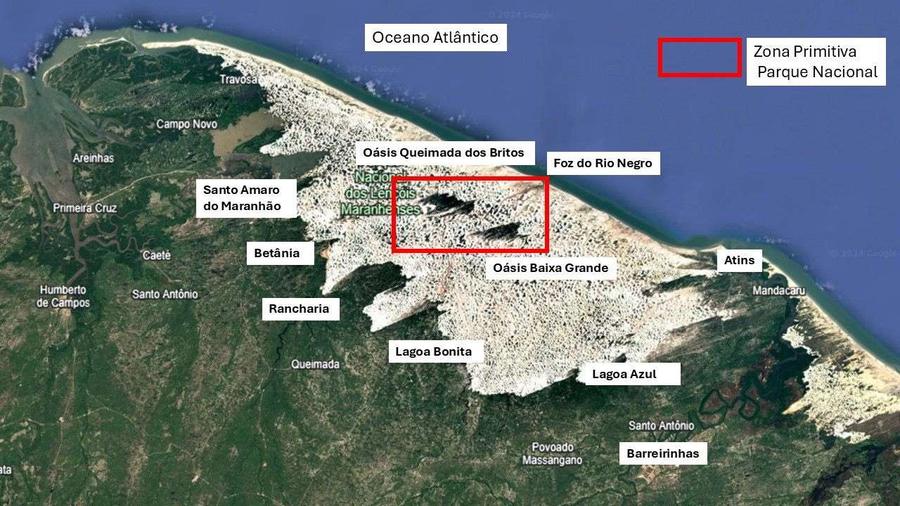
Lençóis Maranhenses is a geological formation roughly 10 thousand years old, considered unique on the planet. Sediments (Quartz makes up 95%) carried by the region's rivers are transported to the ocean and deposited along the coast, where the strong winds push them onto the mainland, replacing the landscape once formed by the Amazon, Cerrado and Caatinga biomes with endless fields of dunes. The Lençóis Maranhenses National Park (1981) holds the largest dune field in Latin America, spanning 90 thousand hectares. The difference between other deserts and this one is that Lençóis Maranhenses is located in the Brazilian Pre-Amazon, where rainfall is high (1600-2000mm per year) between January and June. This volume of rain is enough to feed the water table until it rises to the surface. This surfacing of the water table forms lagoons or lakes, all of freshwater, crystal clear thanks to the sandy soil and the purity of the water, which is renewed every year. In 2024, Lençóis Maranhenses was named a UNESCO World Natural Heritage Site. The main requirements to be on this select list are universal value and natural and cultural importance. These sites are important for preserving biodiversity and the landscape, and for protecting endemic and endangered species. They are also a source of income for local ecotourism.